Article
We went from a niche market to a social phenomenon in just a few years
July 10, 2019
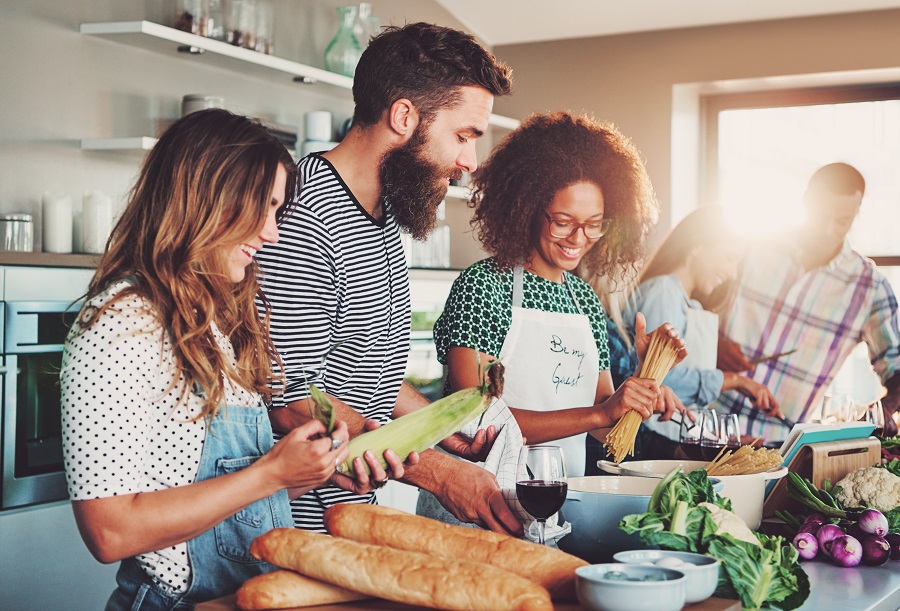
Dubble is a "healthy" fast food franchise that offers natural and fresh dishes prepared on-site. Launched in 2006 by Corinne Fossey-Eon and Jean-François Eon, it is expanding rapidly on a fast-growing market aiming to combine healthy eating with active care for the environment.
 How has your market changed since 2006?
Another striking phenomenon is how vegetarian and vegan dishes have become commonplace. They went from a very narrow segment, available at bohemian restaurants, to a full-fledged market. It's amazing. A survey conducted last year in 10 of our restaurants showed that 30 percent of our customers chose us for our vegetarian or vegan dishes.
So, how are you going to nearly double your number of restaurants by 2020?
This is something we pay close attention to. Our paper bags are made in France from pine residue from the Landes region. Our cutlery is made of corn starch and will soon be made of wood. Starting in October 2019, our meal boxes will be made of bamboo pulp, as will our cups, currently made of cardboard. Except for box covers, all our disposables will soon be compostable and environmentally friendly.
All our recipes use fresh seasonal products to promote short supply chains, whenever local agriculture makes it possible. We are now listing organic grain suppliers, which is a key step for us because our recipes use a lot of it.
To control food waste, our franchisees can join the Too Good to Go program. It's an app that allows you to offer the day's unsold products at prices three to four times lower than their value. The first six months of use was very promising. Twenty Dubble restaurants joined the program and "saved" the equivalent of 7300 meals.
Then there's waste separation, which remains a thorny issue. It's financially burdensome for our restaurants, and it's impossible to handle in the same way across our chain. As commercial operators, we are now responsible for arranging our own waste collection. Local authorities are no longer required to do this. The channels are unfortunately not always developed, and the solutions available vary considerably from one city to the next. We're working on it, but we know that we must find solutions on a case-by-case basis.
Insights in Your Inbox
Sign up for our Newsletter